Tuesday, June 16, 2009

Back in Rio de Janeiro

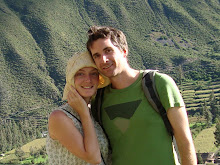
I haven’t been back to Rio since I lived here for 5 months in 2002 during my third year at university. It was exciting to be back and to meet up and stay with a good friend of mine from here, Mariana, her daughter Melissa and fiancĂ© Paul.

Paul is Dutch, home to delicious syrup waffles; they have bought a syrup waffle machine over from Holland, like a toastie-maker and are hoping to start selling them in local markets. They are certainly yummy and should go down a treat with sweet-toothed Brazilians and Dutch tourists missing home.It made a really nice change to relax with friends in their home – cooking, watching a film and we rose to the challenge admirably of playing a similar game to junior Trivial Pursuit in Portuguese, only just pipped to the winning post by Melissa.A warm-up game of snakes and ladders.

We stayed in Rio for the weekend, then went to a beautiful island a few hours away, Ilha Grande, and came back for another weekend. Thank you very much Mariana, Melissa and Paul.

Sunday, June 14, 2009

Protest Tower Block

Reaching high into the sky behind Sao Paulo's historic market is a huge, empty tower block. It is one of several that we noticed in the city. This all too common sight is due to buildings owned by private companies falling into disrepair and then a combination of the taxation system and the cost of maintenance meaning that it is much cheaper to leave them empty and boarded up. Homelessness is a massive problem in Sao Paulo with an estimated 10,000 people living rough on the streets around the center. There are enough empty blocks to provide accommodation for these and more people if the government were brave enough to take action. This might sound hopelessly idealistic, but until fairly recently the block was fully occupied by previously homeless families in what was the biggest single squat in the whole of South America.The 'Prestes Maia', a 22 storey tower block, housed 486 families, a library, workshops, and a venue for numerous educational, social and cultural activities. People of all ages and upbringings, children, elderly, disabled, artists, activists and students, had all been working together to create a new understanding of how the city should and can work. However, the 'lawful owner' wanted it emptied, despite having accumulated a debt in municipal taxes of some 5 million reais (approx. 1.5 million pounds) during the last 15 years of 'ownership'. This enormous debt (more than the value of the building), together with long years of abandonment, could easily justify (even according to law) a claim for the building to become public property by the local municipality, but nevertheless major José Serra used public money to mount a massive police operation and make 1,600 people homeless for his 'gentrification' plans.Today the building looms emptily with only the graffiti to remind us of what an inspiring place it was. It can't be too often that a social movement has succeeded in taking so many people from the streets and giving them self-respect and a safe place to live. When the inhabitants asked where they should go they were told 'back to the streets'. So now instead of having a world-leading example of social reform, Sao Paulo has yet another empty tower block and 1600 people once more added to the homeless statistics.

Plastica Brazilia

A range of monthlies glamorising the perfectly acceptable facet of life for rich Brazilians- which part of the body should be sliced open and filled with a plastic implant next? Enhanced women's bums and men's pecks are looking good this season.

Friday, June 12, 2009

A night out and a tambourine

A couple of nights out and some dancing were our evening objectives in Sao Paulo. We did a bit of digging around online where there are several listings/what's on blogs. For our first night out we found out about a couple of unsigned bands playing in a cultural centre. Off we went, only to find out that it was at the top of a six-storey shopping centre and the main event was, in fact, a fashion show. The bands were ok but the place was too sterile for music, far more interesting was the people watching - an international crowd of trendies and dandies had turned out - and we couldn't help but make the obvious comparison between this fashion set and the people we had encountered on the streets of the centre earlier in the day.

There's only so much time can be spent watching young people in silly clothes walk up and down a catwalk, and that time is not long. So our first night out was over by about 11pm and we were happily in bed doing a crossword before midnight.

The next day, we spotted this exciting poster in a nice little clothes boutique. We listened to the headline band on MySpace who had a bit of a CSS/Ting Tings thing going on, and decided to get our names on the list, as is the done thing in Brazil and Argentina.
The bands were playing at a club near to our hotel, but we had heard that Vila Madalena, a good 40 minutes on the metro away, was the hotspot for bars. We set off in search of them, but failed to find anything more than a quiet, isolated locals' bar where at least the caipirinha was cheap and the people on the next table were playing a guitar and singing traditional songs.

From here we walked for nearly an hour into the centre as the metro had finished for the night, back towards the club, which was much nearer to our hotel. Low and behold, this road was packed with interesting bars and people having fun, all within a 10 minute walk of where we had started out from several hours previously.
Sao Paulo skyline on our walk back into town.
We got to the club to see most of the first band, Monique Maion, and we soon settled into the fun, friendly indie vibe, with a little help from another caipirinha.
As the evening wore on, the club filled up, the caipirinhas hit the spot and we took our place at the front of the dancefloor for the rest of the evening. A band called Copacabana Club, who have had a bit of success recently, were the main act and were really up for it, putting on a good live show of punky, electro-indie pop.
The lead singer, with this fetching chest tatoo and confident stage presence, decided to leave the stage and join the crowd for this song. She also appeared to invite people towards the stage. Maybe it was the rare treat of a good band or possibly just the influence of the caipirinhas, but Simon soon found himself alongside the band with just a couple of other fellow stage invaders.
He jigged about for a while before grabbing a tambourine, perhaps under the illusion that he was now in the band. He did blend in fairly well as he found the beat with his jingly shaker.
It looked as if things could get edgy for a moment, as someone from the crowd hurled a beer can in Simon's direction and yelled something incoherent at him. As it transpired at the end of the night when he came over for a chat, he was just admiring Simon's t-shirt, which he wanted to see the back of. We learnt that pictures on the t-shirt are from the children's storybook, The Little Prince.
The band ended with a cover version of the Ting Tings 'Shut up and let me go', which sounded a lot better than the slightly irritating original, or once again, maybe that was just the caipirinhas talking. A splendid night in Sao Paulo was had and we made our way back to bed by 5am, which didn't seem so great in the morning when we got up groggily at 9 to catch a bus to Rio de Janeiro.

Art in Sao Paulo

There is a lot of art in Sao Paulo - in museums, art galleries, cultural centres, in the streets and in the designs of buildings. We set out to see some of it but came up short at our first stop, the Modern Art Museum of Sao Paulo when we realised we didn't have enough cash to get in after I had bought a funky new top for our coming night out. Evenso, it was worth passing by because the building is pretty impressive, with its big, modernist, glass body hanging between giant, red legs.

From here we carried on to a huge park near to the centre which is home to several lakes, gardens, museums and a concert hall. A large, central covered walkway and most of the buildings were designed by everyone's favourite Brazilian architect, Oscar Niemeyer.Children playing under Nieymeyer's covered central area in the park.
Outside the wedge-shaped concert hall.
Inside the wedge-shaped concert hall
A very large dome containing an art museum dedicated to women's art.

We went in the Afro-Brazilian museum which turned out to be a real find, full of colourful, vibrant objects and art beautifully displayed. There were several school groups in, using the building as a great resource, for learning about the important African heritage of Brazil.
Afro-Brazilian art in the Ibirapuera park.

In our opinion, the art in Sao Paulo is not just inside the museums but in the architecture, especially that of Niemeyer. His buildings are always a joy to gaze upon, like this large, wave-shaped social housing project in the centre of Sao Paulo.

Thursday, June 11, 2009

An obesity seat on the metro


On the Sao Paulo metro we saw several of these seats on trains or platforms reserved only for those people unfortunate enough to find themselves qualifying for it with a body mass of over 40. How do you know? We didn't see any obese people squabbling over their superior body mass index but can picture the scene.

Tuesday, June 9, 2009

The Immigrant Memorial


From 1888 to 1978, millions of immigrants passed through the Hospederia dos Imigrantes when they first arrived in Brazil. Sao Paulo was the centre for industry in Brazil and they welcomed immigrants to work here and fuel the growth.

Today the building is a museum that celebrates the history and depth of cultural influences in Sao Paulo. It includes a re-creation of their living quarters, with clothes and old suitcases; old machinery is exhibited in areas where training work shops took place; and a steam train sits next to the platform where new arrivals got off.
Upon closer inspection, we discovered that much of the machinery was built in the UK, such as this enormous generator from Loughborough.

Sunday, June 7, 2009

Sao Paulo skyline

Sao Paulo is not the most attractive of cities at first glance, it is busy, dirty, noisy and built without any form of organised town planning. The scale of it though is amazing with enough skyscrapers and high-rises to fill 5 Manhattans. Nearly 22 million people live in the metropolitan sprawl. Leaving the city by coach on a fast moving motorway took the best part of an hour.  Whilst much of the architecture is grey, drab and rundown, dotted about the city in a higgledy-piggledy fashion, are many interesting buildings, old and new, and some very ambitious architecture. Much of our time around the built-up, modern south of the centre was spent gawping upwards.


Despite the size of the city and the short time we spent here, we managed to thoroughly explore the relatively compact centre and get excited about just a few of the things in the arts scene.Paulistas, as people from Sao Paulo are known, are proud of being the centre for cultural events - theatre, music, arts and fashion. 
As we walked around the busy, pedestrianised streets of the centre we were struck by the business bustle of the place and the number of homeless people, living under tarpaulins or simply on cardboard beds in squares and streets. Brazil is famous for its rich/poor divide and nowhere is this more apparent than Sao Paulo, where many of the rich fly in helicopters between tower blocks and thousands of homeless people struggle to survive on the streets.Sao Paulo is a fascinating city to visit and we're really glad we came here. From its architecture, to its cultural scene, to its opportunity for people watching, it's the kind of city where the more time you spend here, the more you discover and the more there is to like.

Saturday, June 6, 2009

A rainy evening and a kids catwalk


We set off to explore Florianopolis by night but made it only half way on a bus when the heavens opened and a crazy amount of rain came down on the city. Walking the city's streets was out of the question, so we headed for a giant shopping centre with a cinema. From the shelter of a bus stop, we sprinted across to the shopping centre through the driving rain, arriving fairly soaked to the sight of reluctant toddlers being paraded up and down a catwalk to the sound track of Camden indie-kids' favourite, Alpha Beat. There were crowds of people filming and taking photos of the unfortunate infants. We hastened to the cinema, where we decided nothing was worth watching, and went home via the supermarket. It was not a top night out in Florianopolis.

Florianopolis

A few minutes after this photo was taken on self-timer, a very chubby and hairy middle-aged man waddled past us in his birthday suit. We were surprised to find ourselves on a nudist beach (which also seemed to be an all-male affair) and decided it best to carry on.
Florianopolis was our first destination in Brazil. It's a big city split between the mainland and an island, which is big and has lots of beaches, bays, hills and a large lake, making it a great draw for travellers and Brazilian tourists alike. We stayed in a fishing village, Barra da Lagoa, which has been developed into a tourist spot, with guesthouses, hostels and apartments, but it retains its charm.The boats still go out every day from Barra da Lagoa and the fish is good.
We spent a couple of days here, and enjoyed scrambling over the hills to nearby bays, a little inappropriately given the stinging ants and rocky terrain, in flipflops.
Climbing up from Barra da Lagoa 
It was a little cloudy on the day we arrived but Simon spotted the sun coming.
Meanwhile, I was pursued, as usual, by stray dogs.
On our final day before an evening bus, we decided to explore the city's old town and business centre. There wasn't a lot to it for tourists, most of them definitely come here for the beaches. We did find a few nice buildings though and a good bar to watch the Champions' League final. 
The central market building, full of fresh fish stalls.