Sunday, January 17, 2010

Somoto canyon

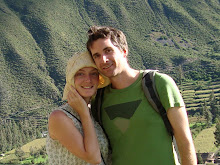
Up in the north of the country, near the Honduran border and not too far from the sleepy town of Somoto, lies the convergence of two small rivers to form the Rio Coco, the longest river in Central America. The first two miles of the Rio Coco just happens to flow through a spectacular, steep-sided canyon. It was only discovered as a tourist attraction five years ago and still receives very few tourists considering its beauty. This is probably set to change shortly, as the location gains in fame as it is now an official national monument, featured on the new 50 cordoba banknote and highlighted in new guidebooks. With Jan and Nick at the head of the canyon.
We've visited twice now and loved jumping in and out of the water, clambering over the rocks, peeking into caves and hiking up to viewpoints with local community guides. With Jonny on what turned out to be a day for lots of swimming and floating.
Swimming through the stunning canyon with clear waters and bats overhead.
Spot Simon jumping off a very high rock into one of the deeper parts of the canyon.
We encountered this little tortoise crossing our path but he quickly retreated into his shell.

Saturday, January 16, 2010

Cerro Negro

Cerro Negro is one of the smaller peaks in the line of volcanoes which runs more or less from northwest to southwest Nicaragua, following the coastline of the Pacific. The volcanoes are a stunning backdrop whenever we're travelling around much of the country.
Cerro Negro is an active, black ash volcano. It looks a bit like a giant slag heap and stands in contrast to the surrounding slopes which are now covered with vegetation. You can't see molten lava but there is a lot of smelly sulphurous gas and yellowy-green rock around its two craters.

We've been there twice now. On the first occasion, with Rachel's cousin Jonny, we joined a tour group and clambered up carrying large boards of wood which we then used to sledge down a steeper and smoother side of the volcano. This was very much a 'manage your own risk' activity. We were given guidelines on tapping your feet to slide at a sensible pace, or lift your legs to fly down and usually fall off. We were kitted out in orange boiler suits with patched up holes and a pair of safety goggles.
Everyone arrived down at their own pace, gravel-splattered, filthy, but uninjured and reasonably exhilarated. Jonny just holding it together as he hit the steep lower section.
Rachel relieved to be down in one piece.

We returned with Jan and Nick, this time finding our own way there in a hired pick-up along unsigned, sandy tracks. This time we walked up and down and made the most of a gorgeous sunset. The way down looked pretty dramatic from the top, but actually was a really great way to descend in big, sliding strides.

Friday, January 15, 2010

New Year's Eve

Feliz y prospero ano nuevo a todos y todas. We're a bit late with our New Year well-wishing as we've been busy having so much fun travelling the country with Jonny (Rachel's cousin) in December, enjoying the festive period and then exploring some more with Jan and Nick (Rachel's aunty and uncle).

We spent New Year's Eve in two different parts of the country. It began early in the hills at Lagartillo. We were up at 5am to join a large group from the community in a walk in memory of six of their family and friends who were killed in a Contra attack there on 31st December 1984. We more or less walked the route that the women and children of the community took that day to flee to the town of Achuapa, around 6 miles away. The walk to the cemetery was enjoyable through beautiful scenery, but also poignant as we chatted about their memories of that day. Nick (who lived in the community in the late 80s) set off fireworks along the route to mark the event.
Words were spoken and a song was sung at the cemetery in honour of the communities heroes and martyrs.

We crammed into the back of a pick-up truck to get a lift up the steep, bumpy track back to the village and on to the second part of the day. The central area of Lagartillo had been transformed with red and black Sandinista bunting and balloons. A stage had been set up for music, poetry and long (and to our ears), fairly dull, political speeches by local Sandinista councillors. There were hundreds of people there and the community provided a delicious beef and vegetable stew, tortillas and a maize-based drink for everyone.

The event was drawing to a close at around 5pm when we set off for Leon with Nick, Rachel and a very talkative Spanish man intent on teaching us ancient Spanish songs for a good part of the journey. Back in Leon, many streets were roped off by residents who had rigged up big sound systems and pinatas and had their plastic tables and chairs set-up on the streets ready to party. We arrived at a friend's house around 11pm where we ate roast chicken and rice before shooting off to the old fort above Leon for a great vantage point to see fireworks being set-off from houses all across the city and to drink a toast to 2010.

Friday, January 1, 2010

Birding with Nelson

Nelson is a good friend of ours from Sontule who came to my classes. Apart from being an enthusiastic student and a hard-working farmer he also studies birds in the Miraflor national park and keeps records of the species that he spots. Part of that work is trapping in nets to record the passing of migratory birds.We got up nice and early and once the cows were milked and we had a bit of food in us we set off with Nelson, his two daughters and Rachel's cousin Johnny, getting a good 6am introduction to the Nicaraguan countryside on only his second morning in the country. We had already prepared two nets the night before and only had to open them out and we set up another one 50m away. Then we lay in wait a few rows of coffee bushes away.The first couple of times we checked, the nets were empty and we were beginning to wonder if there were any birds at all. But soon they started to turn up. It was very fiddly getting the birds untangled without hurting them so we left that bit to Nelson. Once out they were popped in a sack.Back at our little den it was time to search through the books to identify what had got itself stuck in the nets.Some birds were calmer than others.
Everyone had a go at identifying, a task that proved very tricky at times when faced with a page of ten small green hummingbirds with just a fleck of white or a dark beak to separate them.
We trapped nine birds altogether, including four different kinds of hummingbird. It was a lovely morning, very interesting, and in great company.

Tuesday, December 29, 2009

Christmas Day

It was a lie-in for us on Christmas Day. We opened a few presents from our family, including chocolate and toffee, which we got stuck straight into, before getting up and eating delicious papaya, the rest of the hen from the night before and a ginger pudding with rum custard, which we had made in Leon and brought with us. Diosmara and Carolina trying the pudding
A couple of hours later we set off with most of the kids from the village to a big pool in the river. It was the most refreshing swim we are ever likely to have on Christmas Day and great fun playing frisbee and leaping off rocks with the kids. On our return, we chopped up and scoffed an enormous watermelon.

We set off back to Leon after sunset, singing a few Christmas carols in the truck to relate to our UK Christmas. 'In the Bleak Midwinter' and 'Once in Royal David's City' seemed a little odd in context with the rest of the day.

Saturday, December 26, 2009

Christmas Eve


The night of Christmas Eve is the big Christmas celebration in Nicaragua. We spent it in a remote community at Melania's house with Nick and Rachel. We headed up into the hills in a pick-up truck full of presents for all the kids in the village. They all had a little bag stuffed full of things like water pistols, marbles, glowing sweets, rattles, imitation barbies, toy cars, headbands with feathers and balloons. The night before, there was a bag-stuffing party at Nick's to get it all sorted. It's a fairly poor village so the kids wouldn't really get much else apart from this.
We arrived in time to witness the stuffing of the hens, which we were to eat at midnight. American Rachel took on the task of stuffing them which proved to be pretty tricky. Melania had removed all the meat and bones from the plucked hen but left the skin intact with just a slit down its breast. The meat was cooked and then mixed up with oiled, uncooked rice, vegetables, a version of Worcestershire sauce and tomato ketchup. The whole lot was then stuffed back into the hen's skin and sewn up. After four hours in a big outdoor clay oven, the rice had expanded and the hen emerged looking like a plump roast chicken. We had to wait until midnight to get stuck in to platefuls of tasty hen and rice.
The early evening's entertainment got all the kids and women in the village involved in singing, pinatas and water balloon throwing. Simon controlling the pinata string while the little lad tries to whack the star with a stick and make sweets fall out.
The water balloon game
Unfortunately, most of the men and older teenage lads were already drunk by this point having spent most of the day gambling on the cock fight being held in the village.
As the sun went down, a lovely old man with a crinkly face and a twinkly smile donned a flashing Santa's hat, seated himself under a tree in the dusty main street under a lone light bulb powered by a little battery, and proceeded to give out around 100 presents. After this, it was time for the disco, and the drunken lads and men swayed in to partner up with the ladies for a mixture of raggaeton, salsa and hopelessly slow ballads.
At midnight, we set off fireworks and distributed sparklers before retiring to Melania's house to finally tuck in to the hen.

Sunday, December 20, 2009

Learning to kill a hen

We enjoy eating hen and vegetable soup regularly in Sontule. The hens are killed on the same morning they are served up for lunch. They spend their lives before this pecking and scratching at the ground around the house eating a diet of mainly corn and grubs. We hope to be getting involved in farming when we get back to the UK, so we were happy to have the opportunity to learn to kill a chicken and prepare it under the expert guidance of Lucia.
Firstly, the chicken is tied up by its legs to a branch and the wings are folded over themselves twice to prevent flapping. The hen is soon surprisingly calm.
The next part can be a bit tricky for an amateur: cut the skin on its neck, locate the major blood vessel, and sever it with the knife. Unfortunately, on my first attempt I chopped the windpipe. Not only that, but after I had cut the correct vessel and the blood started to flow out of the hen's body, it gave a last mighty flap. I had only crossed the wings over once, rather than twice, and Lucia and I were splattered with dark, sticky blood. The hen dies within seconds but continues to twitch for a while. It's left to hang for a good half hour to drain all the blood.

The next stage is to pluck it. To do this easily, the hen is submerged in a big pan of boiling water for a few seconds and then it's no problem to pull out the feathers.
Feather-plucking
There are still a few remaining bits of feather so the next step is to char the skin well over a flame. Next the chicken is scrubbed with soap and then rinsed thoroughly.
All that's left to do then is to cut the carcass into pieces. We were impressed by how efficiently and quickly Lucia did this, extracted the windpipe and the few bits that really are inedible (although the cat was happy to give them a go). The organs were kept, as was an egg, still in the hen, and a few developing eggs.

This hen (gallina) had clearly led a long and active life, as the meat was a little on the tough side, but it did taste good and for us it was important to know what goes into the process of killing, preparing and eating a bird.

Sunday, December 13, 2009

Costa Rica visa run

We went to Costa Rica for a few days to renew our visas after nearly 6 months in Nicaragua. We only got as far as the northern town of Liberia where we spent an afternoon and evening wandering around before heading to the beach. The main square in Liberia, full of families wandering around and sitting on benches in the evening.
By night, the stalls lining the square opened up to reveal an enormous amount of Christmas tat, of the like we haven't seen in a good while - there's not much of it in Nicaragua.
We had taken a tent with us and planned to camp in a national park but it all seemed a bit ambitious when we were informed that the well had dried up in the campsite and the only option would be to trek for 20 kilometres with all the water and food we needed for several days. Instead, we found an air-conditioned apartment in the very touristy Playa Coco. We went to a couple of other beaches around the headland, saw monkeys swinging in trees, ate pizza, saw lots of Americans and had a very relaxing few days.
Playa Hermosa
Playa Ocotal
We liked what we saw of Costa Rica although we prefer Nicaragua!

Tuesday, December 1, 2009

Animal babies

A month or so ago quite a few of the animals in Sontule started popping out babies. Two pigs gave birth and no matter how hard-hearted a campesino, you can't help but smile at the sight of 21 piglets scampering around. Young piglets suckling an hour after being born.
The less cute side to it. The exhausted mother and the pile of afterbirth. Evidence of the fact that the last piglet had only popped out twenty minutes before this photo was taken.
Traviesa, meaning 'naughty', also had a litter of 5 pups. She hasn't been the greatest of mums as she ate some toads, got very sick, and ignored them for several days. Things were starting to look bleak but luckily she got her appetite for tortillas and bones back and started feeding them again. The puppies are now doing well and making a nuisance of themselves by licking our toes as we try to shower or drinking soapy water as we wash our clothes.
The piglets four weeks on. They tear after their mother if they think there is a chance of milk. The rest of the time, they could be anywhere around the garden, the fields or the road.